


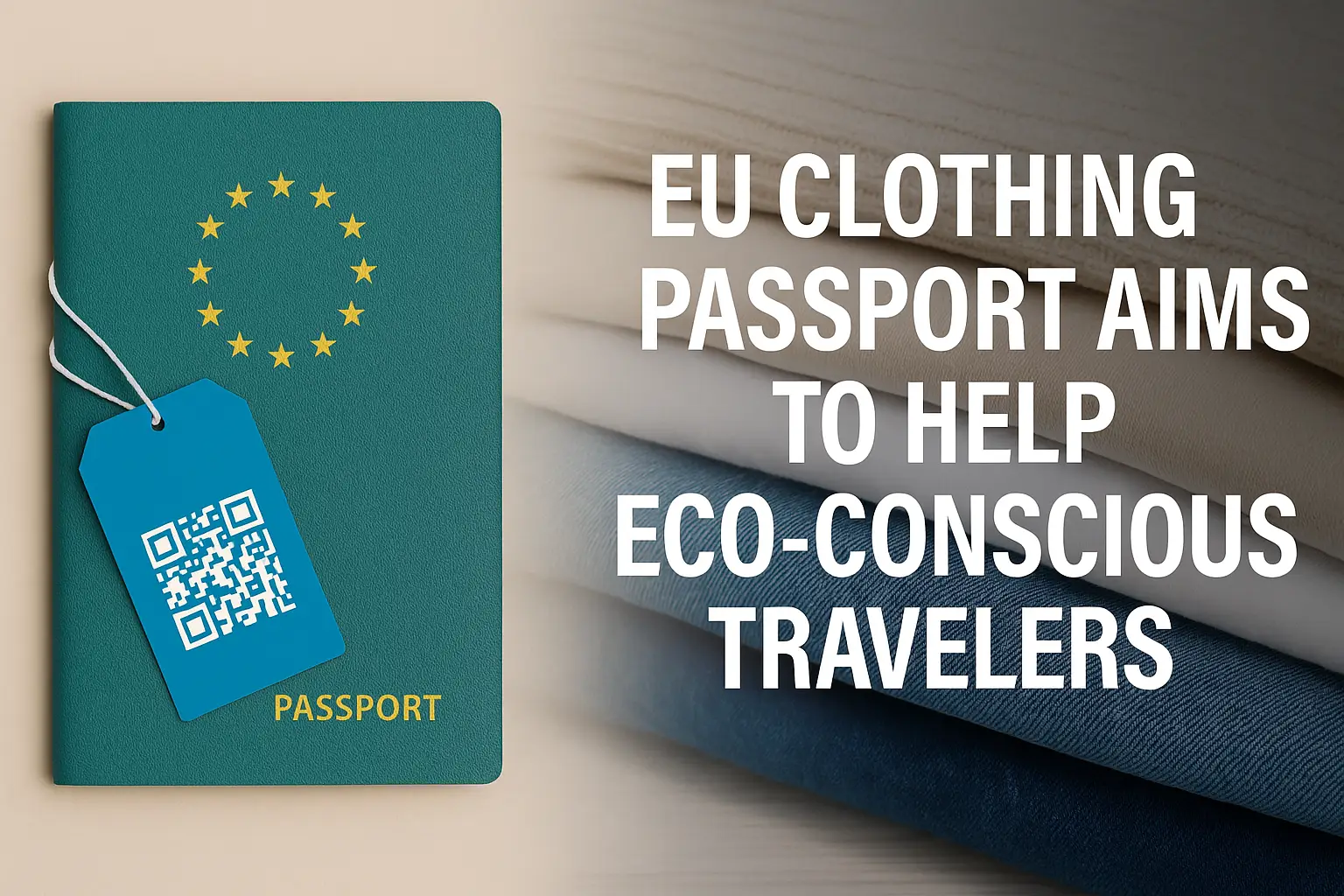
EU clothing passport aims to help eco-conscious travelers align their packing choices with sustainability values. By 2026, clothing sold in the European Union will require a digital product passport, part of a broader initiative to make fashion traceable, recyclable, and environmentally responsible by 2030.
What Is the EU Clothing Passport?
The digital clothing passport is a traceability tool designed to document where, how, and with what impact garments are made. This includes details about fiber origin, labor practices, environmental certifications, and the end-of-life plan for each item. Beginning in January 2026, all apparel sold in the EU will be required to carry this information, according to the EU Strategy for Sustainable and Circular Textiles.
This passport responds to growing consumer demand for transparency in the fashion industry and aims to curb the overproduction and disposal of cheap, fast-fashion clothing. Currently, only 1% of global textiles are recycled into new garments, while a truckload of clothes is discarded every second, as reported by the European Environment Agency.
Why It Matters for Sustainable Travelers
For eco-conscious travelers, what’s in the suitcase is becoming just as important as where the suitcase goes. The new digital clothing passport will help travelers verify if their travel wardrobe aligns with their sustainability goals. Instead of relying on vague brand claims, tourists will be able to scan or access verified details about how their clothes were made and how to recycle or dispose of them properly.
It’s an especially relevant shift for those traveling within the EU, where sustainable tourism and responsible consumption are increasingly promoted in national strategies. From eco-certified accommodations to slow travel routes, this clothing passport is the next step in making sustainability a seamless part of the travel experience.
Challenges Facing the Fashion Industry
According to the 2024 Circle Economy report, 99% of materials used in the global textile industry are not recycled. In the EU, 5.2 million tons of clothing and footwear are discarded annually—about 12 kilograms per person. Only a small percentage of these garments are recycled effectively.
Paloma García López, director of The Circular Project, explains that even the clothing left in recycling bins is often unusable. “The fashion industry produces garments faster than the market can absorb, making most of it waste from the start,” said García López. As demand shifts toward higher-quality, traceable materials, the new regulations are expected to reduce overproduction and promote repair, reuse, and proper recycling.
What Will Be Included in the Clothing Passport?
The digital passport will document key data such as:
- Type and origin of fibers used
- Production location and working conditions
- Environmental certifications and chemical use
- Instructions for repair, resale, and recycling
- Carbon and water footprint of the item
For travelers shopping abroad or preparing for trips, this data will serve as a practical guide to making more ethical wardrobe decisions. It may also influence what kinds of clothing are available in airport shops, resort boutiques, and local markets across Europe.
Ultimately, the EU’s move toward sustainable fashion aligns with a larger cultural shift: conscious travel. As more people seek to reduce their environmental footprint, digital passports for clothes could become a natural extension of green itineraries and mindful tourism.
link