


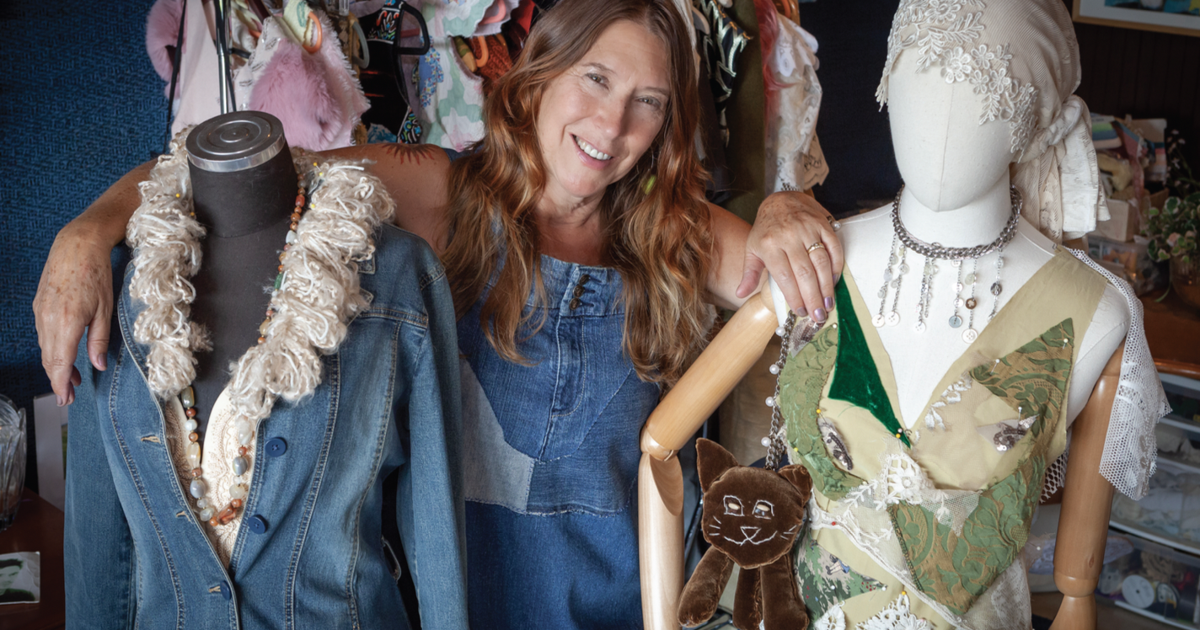


Kim McCormick is the creative force behind Kimmi Designs.
Local designer Kim McCormick wants to help change the fashion industry.
The Burien resident has spent most of her life sewing her career in the fashion world, from production, to design, and retail — she’s seen it all. After witnessing the amount of fabric wasted within the sector, she started a brand that repurposes soon-to-be-discarded textiles and fabrics. Launched in the early aughts, Kimmi Designs is an ethical and eco-conscious brand that McCormick hopes will encourage people to rethink how they buy and wear clothes.
According to earth.org, the average U.S. consumer throws away about 811/2 pounds of clothes every year, much of which ends up in landfills. The fast-fashion industry ultimately contributes about 10% of global CO2 emissions annually, and because that sector — represented by brands such as Shein, Temu, and others — is growing in popularity, these numbers are estimated to inflate exponentially.
As a designer, McCormick makes it a point to source fabrics through her Goodwill Outlet, which requires shoppers to purchase clothes by the pound, and from other thrift stores. She primarily designs women’s wear, creating bold, bright, and sparkly outfits that feature a variety of textures and fabrics.
When browsing McCormick’s Instagram, one will find creations like gold evening gowns covered in lace appliqués and other clever, peeking-out details; a Muppet-esque multicolored dress made of strings of yarn and pom poms; or a form-fitting dress made from a blanket that has a picture of two deer grazing under a mountain range.
McCormick’s work can be spotted locally at galleries and fashion shows. Working with Fogue Studios & Gallery, McCormick has hosted events that highlight budding artists who, like her, produce sustainable clothing.
We sat down with McCormick to talk about her definition of ethical fashion, hosting a fashion show, and what inspires her. Our conversation has been edited for length and clarity.

What drew you to designing clothes?
I’ve always loved designing my own things and creating things for my friends. It’s just always been an inherent part of my life. After I attended design school, I have always worked in the fashion industry. From production to retail, all different avenues. It wasn’t until probably the late ’90s, early 2000s, that I started using upcycled textiles exclusively because I saw how much waste there was in the fashion industry. When I worked in production, especially, it was just an incredible amount.
How do you define ethical fashion?
Utilizing what exists and not contributing to the problems fast fashion produces. We have huge amounts of existing textiles to use. We have enough right now in this country alone — not to mention worldwide — to keep us sewing for years and years to come. I understand the lure of using new fabrics. It’s easier, no doubt, but it’s not always ethical to me because of how it’s produced and the pollution it causes to produce it. It’s good to be aware of where your fabrics are coming from, whether they be new or upcycled.
Why is it important for ethical fashion to thrive in today’s industry?
The environmental aspects of fashion are huge on our ecosystem. The pollution from mass-produced fashion — fast fashion in particular — is the No. 2 polluting force in the world because of its use of petroleum and extremely corrosive dyes that are environmentally devastating.
What kind of clothes do you design?
I predominantly design clothes for women. I have designed menswear, but some of my things are unisex. I design a lot of dresses. I had gotten a lot of requests to do wedding dresses — I love lace, and I was kind of attracted to that fabric. And that was a fun thing to do for a few years, and then I just kind of got tired of it. I’ll still do a wedding dress for someone if they want it, but I would much prefer to do more colorful things. I like working with old blankets, quilts, and denim. I really like denim a lot. It’s a lot more versatile and more unisex as well.
How has the local arts and fashion community responded to your work?
Pretty favorably. In the last few years, much more favorably. In the beginning of the 2000s, not so much, because people would be like, “Ugh, that was used fabric?” Now it’s more sought after, and more people are doing it, which I’m really happy to see. So it’s a much more favorable reaction now.

How does it feel to be ahead of the curve?
Good. I hope I’ve been somewhat of an influence to some people coming up that they could see that upcycled materials can be used to create clothing. It’s a little frustrating, too. Like, gosh, why didn’t people see it sooner, but I guess, better late than never.
Over the summer, you hosted a fashion show, “ReVamp: Rework, Revitalize, Reimagine.” What goes into creating a fashion showcase?
It’s like herding cats. I have to organize the artists; the models; the makeup artists; hair artists; photographers; and, of course, the venue. It takes a few months to get all of that organized. So, it just takes an incredible amount of communication.
Are there any designers who inspire you and your work?
Iris van Herpen. She’s just so inspirational and surreal. Her work is very beautiful.
How do you find inspiration for your designs?
It just comes to me sometimes. I hike a lot through the woods and down the beach. Things in nature are very inspiring to me, like the shape of leaves or the shape of kelp floating in the water, or the different shades of rocks.
What are you looking forward to for the future of fashion and ethical creators?
The emergence of more designers doing it is very exciting to me. It’s just so diverse right now. It’s very encouraging, and I think that will hopefully make more consumers buy their things and hopefully make people think differently about how they consume fashion and what they’re wearing on their body. I think that’s very exciting.
link