



Cashmere Clothing Market
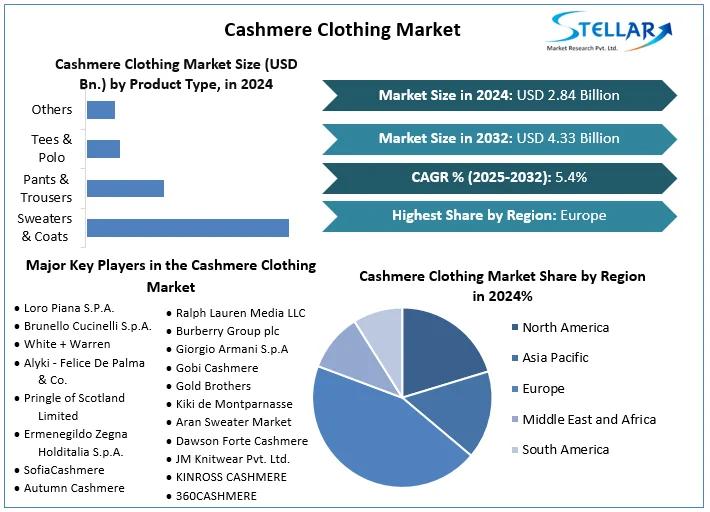
The Cashmere Clothing Market size was valued at USD 2.84 Billion in 2024. The Market is expected to grow at a CAGR of 5.4%, reaching nearly USD 4.33 Billion during the forecast period of 2025-2032.
The cashmere clothing market represents a premium segment of the global apparel and textile industry, known for its softness, warmth, and lightweight comfort. Cashmere is derived from the fine undercoat of cashmere goats, primarily found in regions with cold climates. Due to its limited supply and labor intensive production process, cashmere is considered a luxury fiber and is widely used in high end clothing such as sweaters, scarves, coats, shawls, and knitwear.
Consider how these insights might influence your strategic decisions:
Rising consumer preference for premium and comfortable apparel, coupled with increasing awareness of fabric quality and durability, is supporting steady growth in the cashmere clothing market. Cashmere garments are valued not only for their luxurious feel but also for their insulating properties and breathability, making them suitable for a wide range of climates. The market has also benefited from growing demand for timeless and versatile fashion pieces that offer long term value compared to fast fashion alternatives.
Market Dynamics
The dynamics of the cashmere clothing market are influenced by raw material availability, fashion trends, and sustainability concerns. One key dynamic is the limited supply of high quality cashmere fiber. Cashmere production depends heavily on specific geographic regions and climatic conditions, making the supply chain vulnerable to environmental changes and geopolitical factors. This limited availability contributes to higher prices and influences market stability.
Another important dynamic is the growing emphasis on ethical sourcing and sustainable fashion. Overgrazing and environmental degradation associated with cashmere goat farming have raised concerns among consumers and regulators. In response, brands are investing in responsible sourcing practices, improved animal welfare, and traceable supply chains to reduce environmental impact and build consumer trust.
Fashion cycles and seasonal demand also affect the market. Cashmere clothing is typically associated with colder seasons, leading to seasonal fluctuations in sales. However, innovations in lightweight cashmere blends and trans seasonal designs are helping brands extend demand throughout the year.
Key Drivers
One of the primary drivers of the cashmere clothing market is rising disposable income and increasing demand for luxury apparel. As consumers seek higher quality garments that offer comfort and status, cashmere continues to be a preferred choice. Growth of the middle class in emerging economies is also expanding the consumer base for premium cashmere products.
The growing focus on comfort driven fashion is another significant driver. Changing lifestyles and work patterns have increased demand for comfortable yet stylish clothing, especially knitwear and casual luxury apparel. Cashmere garments meet this demand by combining softness, flexibility, and elegant aesthetics.
Brand differentiation and innovation also drive market growth. Fashion brands are introducing new designs, color ranges, and blended fabrics that enhance durability and affordability. The rise of e commerce and direct to consumer channels has further improved market access, allowing brands to reach a wider global audience and offer personalized shopping experiences.
If you have questions about the data, reflect on how it may impact your sector:
Market Segmentation
By Product Type
Sweaters & Coats
Pants & Trousers
Tees & Polo
Others
By Sources
Pashmina Goats
Cashmere Goats
By Distribution channel
Online
Offline
Others
By End User
Men
Women
Kids
Regional Analysis
Europe is a major market for cashmere clothing, supported by strong fashion heritage, high consumer awareness, and demand for luxury apparel. Countries such as Italy, the United Kingdom, and France play a key role in design, manufacturing, and consumption of cashmere garments.
Asia Pacific is both a key production and consumption region. Countries such as China and Mongolia are major suppliers of raw cashmere, while rising disposable income and changing fashion preferences are driving consumption across the region. The growing influence of global fashion trends and expanding luxury retail infrastructure further support market growth.
North America represents a significant market driven by demand for premium and comfortable apparel, particularly during colder seasons. Consumers in this region show strong interest in high quality knitwear and sustainable fashion products.
Other regions including Latin America and the Middle East and Africa are emerging markets, with growing demand for luxury clothing driven by urbanization and increasing exposure to global fashion brands.
Consider how these insights might influence your strategic decisions:
Opportunities and Future Outlook
The cashmere clothing market presents attractive opportunities for brands that focus on sustainability, innovation, and transparency. Responsible sourcing, certification programs, and environmentally friendly production methods can help address ecological concerns and strengthen brand reputation.
There is also growing opportunity in developing blended cashmere fabrics that balance luxury with durability and affordability. Expansion into new markets through online platforms and customization options can further enhance growth potential. Despite challenges related to raw material supply and sustainability, the cashmere clothing market is expected to maintain steady growth, supported by enduring demand for high quality, comfortable, and timeless luxury apparel.
Key players
Loro Piana S.P.A.
Brunello Cucinelli S.p.A.
White + Warren
Alyki – Felice De Palma & Co.
Pringle of Scotland Limited
Ermenegildo Zegna Holditalia S.p.A.
SofiaCashmere
Autumn Cashmere
Malo
Corso Italia S.p.A.
TSE & Cashmere House, Inc
Jennie Liu
Herms International S.A.
Huzhou Zhenbei Cashmere Products Co. Ltd.
Ralph Lauren Media LLC
Burberry Group plc
Giorgio Armani S.p.A
Gobi Cashmere
Gold Brothers
Kiki de Montparnasse
Aran Sweater Market
Dawson Forte Cashmere
JM Knitwear Pvt. Ltd.
KINROSS CASHMERE
360CASHMERE
Citizen Cashmere Ltd.
Frequently Asked Questions
1. What is the market growth rate of the global cashmere clothing market?
The market growth rate of the cashmere clothing market is 5.4% CAGR.
2. What are the key regional markets in 2024?
Europe and North America are regional markets which dominate the Cashmere clothing market in 2024.
3. Which are the key players in the global cashmere clothing market?
Loro Piana S.P.A., WHITE + WARREN, Pringle of Scotland Limited., and Gobi Cashmere are some of the dominant players in the cashmere clothing market.
4. Which is the most attractive type in the cashmere clothing market?
Sweaters and coats is the most attractive type in the cashmere clothing market.
5. Which segment accounted for the largest cashmere clothing market share in 2024?
Product Type segment accounted for the largest cashmere clothing market share in 2024.
Research Reports:
Global Water Purifier Market
Pet Food Market
North America Pet Food Market
Asia Pacific Water Purifier Market
Party Supplies Market
Asia-Pacific Matcha Market
Hydration Backpack Market
Mold Removal Services Market https://www.stellarmr.com/report/mold-removal-services-market/2739
Phase 3, Navale IT Zone, S.No. 51/2A/2,
Office No. 202, 2nd floor, Near,
Navale Brg, Narhe,
Pune, Maharashtra 411041
Stellar Market Research is a multifaceted market research and consulting company with professionals from several industries. Some of the industries we cover include medical devices, pharmaceutical manufacturers, science and engineering, electronic components, industrial equipment, technology and communication, cars and automobiles, chemical products and substances, general merchandise, beverages, personal care, and automated systems. To mention a few, we provide market-verified industry estimations, technical trend analysis, crucial market research, strategic advice, competition analysis, production and demand analysis, and client impact studies.
This release was published on openPR.
link