
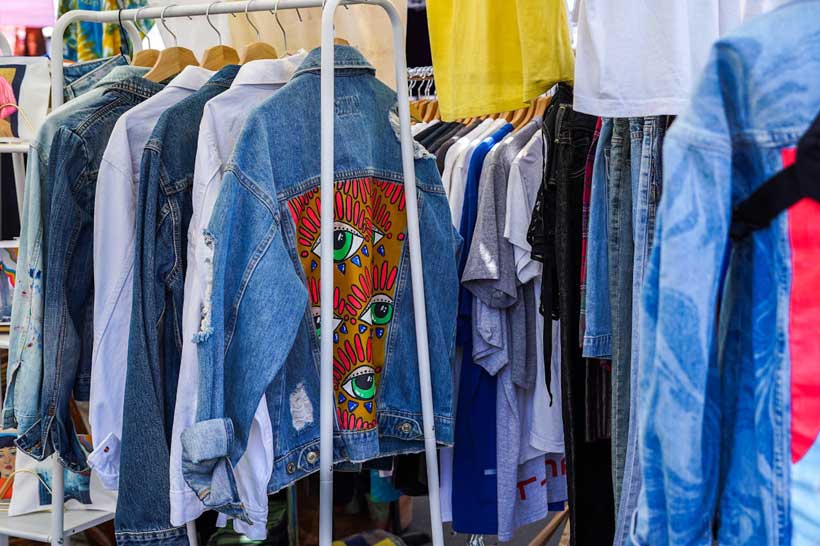
On a Saturday afternoon in Delhi’s Majnu ka Tilla, between racks of old-school leather jackets and vintage Levi’s, a college student haggles for what she calls “a pre-loved gem.” It’s not nostalgia; it’s economics. The same crowd that once queued up for H&M hauls is now hunting for denim that has already lived a life.
Thrifting, once dismissed as a middle-class workaround, has quietly become the new cool. From Delhi’s Janpath to Mumbai’s Fashion Street, India’s metros are watching their fashion cycle spin in reverse. Instagram thrift pages sell out in minutes, college campuses run clothing exchanges like trading floors, and phrases like “drop,” “circulation,” and “archive find” have replaced “new arrival.”
For Gen Z, the math just adds up. Fast fashion isn’t fast enough to keep up with changing tastes, and it certainly isn’t cheap. Add in a post-pandemic hangover and rising awareness about climate impact, and you get a generation that sees value differently. The new Indian shopper is less about retail therapy and more about resellability.
“It’s not about being cheap; it’s about being smart,” says Ananya, a 20-year-old student thrift seller. “I’d rather spend ₹400 on a jacket lasting five years than ₹3000 on one that won’t survive the next wash.”
That sentiment has given rise to what economists might call micro-circular economies, but students simply call it Uniswap. At Ashoka University, the student-run WhatsApp group of the same name is a daily digital flea market; tote bags, denim, dorm decor, and the occasional festive kurta are all listed, bought, and swapped within minutes. “Someone’s dorm clean-up is someone’s Diwali outfit,” joked a frequent buyer.
What began as a casual chat to get rid of extra clothes now moves dozens of items every week. For sellers, it’s pocket money; for buyers, it’s a treasure hunt; and for the campus, it’s an informal experiment in sustainability that actually works. No jargon, no corporate campaigns, just a bunch of twenty-year-olds trading things they already own.
And here’s the twist: the clothes they’re swapping are often better than the ones they’d buy new. Vintage or older pieces, made before the fast-fashion boom, tend to last longer. The fabrics are thicker, seams sturdier, and silhouettes timeless. “Old Zara is built different,” says a Mumbai reseller with 12k Instagram followers. “People don’t realize the older stuff survives. The new ones? You blink and they sort of unravel.”
That quiet appreciation for quality is part of a larger cultural shift. Thrifting isn’t just about affordability or sustainability anymore; it’s a statement of taste. Today’s consumers don’t want more; they want better. They’ve seen enough trends to know what fades fast, and they’d rather own something with a story. A faded tee from the 2000s says more about individuality than a mass-produced ‘limited edition’ drop.
The movement has housed its own personalities. There are curators, who scour flea markets and turn them into slick Instagram boutiques with aesthetic grids. There are Conscious Professionals, young earners who thrift as a practical, planet-friendly choice. And then there are Style Hunters, influencers who’ve turned Sarojini into their styling studio. Together, they’ve killed the old stigma around “used.” You don’t wear secondhand; you embody it.
The thrift economy’s numbers are catching up with its attitude. Globally, resale is expected to hit around $350 billion by 2030. Platforms like Refash and Curated Finds report double-digit growth, while homegrown pages like Bomb Thrift and Vintage Laundry are building loyal micro-communities. Even small sellers are seeing steady income streams, with some clocking ₹20,000 a month from curated Instagram drops.
Tech has further fuelled this anti-trend. The same Instagram algorithm that once pushed haul videos is now pushing thrift reels. Every “sold” post is a small act of resistance against a culture of endless consumption. The pride isn’t in the price tag anymore; it’s in the preservation.
The next era of Indian fashion won’t be built on what’s newest, but on what’s still worth wearing. In a world where logos once screamed status, India’s new shoppers are finding quiet confidence in knowing what and why they buy.
link